

据普氏能源资讯开普敦11月7日消息称,尼日利亚石油部长Emmanuel Kachikwu周二表示,随着日产量20万桶的Egina油田的开工,尼日利亚的石油产量有望在明年年初攀升到220万桶/日左右。
非洲最大的石油生产国尼日利亚在过去五年中没有看到任何重大的新石油项目,这使得由道达尔公司运营的Egina项目更加关键。
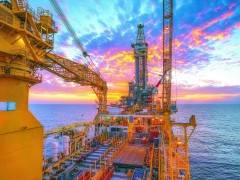
这个耗资160亿美元的深水项目是尼日利亚最大的石油和天然气投资项目,将使其原油产量稳定增长10%以上。Egina油田预计将于下个月开始投产,日产量约为150000桶,并在约六个月后增加至200000桶/天。
Kachikwu在开普敦非洲石油周会议间隙接受普氏的采访时表示:“Egina应该在十二月或者一月份投入生产......我希望这可以让我们在明年年初之前日产量接近215万到220万,除非出现意外关闭。”
Kachikwu表示,该行业的国外投资有所改善,并且“相当不错”,他指出,如果我们获得所需的合适的金融投资,未来几年的日产量可能再增加20万至40万桶。
他补充道:“从长期来看,我们的长期目标约为250万桶/天,我认为在未来的8到10年内,日产量可能会攀升至300万桶/日。”
他说,Bonga Southwest和Zabazaba项目是两个上游投资项目,可以进一步推动石油生产。
在过去两年内,尼日利亚日产量稳定在160万至200万桶,低于其220万桶/日的全部产能。由于石油资源丰富的尼日尔三角洲的主要石油基础设施受到攻击,2016年该国石油产量下滑至约30年低点,约110万桶/日。
该部长补充说,石油产量略低于200万桶/日,原油产量约160万桶/日,凝析油约40万桶/日。
关于欧佩克组织,Kachikwu表示尽管欧佩克最近表示需要调整政策,但他不认为欧佩克会改变当前的产能战略,
他补充道:“除非我们完全了解伊朗的影响,否则我认为不需要任何行动,”“我认为有太多的警报。我对欧佩克组织的建议是要小心这些警报......我不相信在下次会议上会有很大的改变。”
欧佩克组织联合部长级监测委员会最近对宏观经济不确定性和库存增加表示担忧,称可能需要该组织改变方针。
欧佩克组织和10个以俄罗斯为首的非石油输出国欧佩克成员国在6月底同意降低生产依从性,将日产量提高100万桶。
尽管价格从几周前的80美元/桶以上大幅下跌,但他表示欧佩克对接近70美元/桶的价格非常满意。
陈菲 摘译自 普氏能源资讯
原文如下:
Nigeria's Kachikwu says oil output set for growth spurt
Nigerian oil production is set for a timely boost, climbing to around 2.2 million b/d by early next year with the startup of the giant 200,000 b/d Egina field, oil minister Emmanuel Kachikwu said Tuesday.
Africa's biggest oil producer, Nigeria has not seen any major new oil projects in the last five years which makes the Total-operated Egina project even more pivotal.
The $16 billion deepwater project is the biggest oil and gas investment in Nigeria and will boost its plateauing crude production by over 10%. Production from the Egina field is due to start next month at around 150,000 b/d and could ramp up to 200,000 b/d after about six months.
"Egina should come into production in December or maybe January...Hopefully, that should lift us closer to 2.15 million-2.2 million by the start of next year barring any unforeseen shutdowns," Kachikwu said in an interview with S&P Global Platts Kachikwu said foreign investment in the sector had improved and was "reasonably good," noting that production could rise by a further 200,000-400,000 b/d over the next few years "if we get the right sort of financial investments that are required."
"Longer term it [the target] is around 2.5 million b/d and i think you could see it creep up to 3 million b/d in the next eight to 10 years," he added.
He said the Bonga Southwest and Zabazaba projects were the two upstream investments that could propel oil production further.
Nigerian output has been steady at around 1.6 million-2 million b/d over the past two years, below its full capacity of 2.2 million b/d. In 2016 output slumped to around-30-year lows of around 1.1 million b/d due to attacks The minister added that oil output was just below 2 million b/d with crude accounting for around 1.6 million b/d and condensate comprising some 400,000 b/d.
On OPEC, Kachikwu said he did not think the producer group would change its current output strategy despite it recently suggesting the need to tweak policy.
"I do not think there is a need for any action unless we fully know the impact from Iran," he added. "I think there is too much of an alarm. My advice to OPEC is always to be careful of these alarms...I do not believe a big change will be taken at the next meeting."
OPEC's Joint Ministerial Monitoring Committee recently expressed concerns about macroeconomic uncertainty and rising inventories saying it might require the group to change course.
OPEC and 10 non-OPEC partners led by Russia agreed in late June to reduce over-compliance with production cuts to raise output by a collective 1 million b/d.
Despite the sharp drop in prices from above $80/b a few weeks ago, he said OPEC was very comfortable with prices nearer to $70/b.