

EIA的8月份《短期能源展望》(STEO)预测,美国的原油产量在2018年为平均每天1,070万桶,在2019年为平均每天1,170万桶。如果实现,上述两个预测值都将超过1970年创下的960万桶/日的纪录。这种全国性的增长几乎完全是由紧张的石油推动的。尤其是德克萨斯州西部的二叠纪地区和新墨西哥州东部,预计将占2019年原油产量增长的一半以上。
EIA预测二叠纪地区的产量在2018年为平均330万桶/日,在2019年为平均390万桶/日。尽管有利的地质条件,以及技术和操作的改进,使二叠纪地区成为美国经济上较有利的原油生产地区之一,但最近的管道容量限制抑制了该地区石油生产者的井口价格。与2018年相比,该地区井口价格的下降导致了2019年二叠纪原油产量的增长放缓。
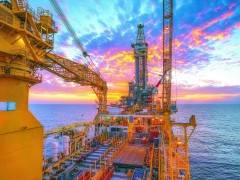
EIA 预测,2019年联邦近海墨西哥湾 (GOM)的 产量将增长158,000桶/日,达到平均190万桶/日,使该地区成为STEO预测2018年至2019增长的第二大贡献者。预测增长的动力来自于2017年开始生产的2个新油田的快速增长,预计2018年将有10个新油田开工,2019年将有6个新油田投产。这18个油田预计将在2019年的190万桶日产量中贡献480,000桶日产量。
EIA预测,巴肯地区的产量将在2018年创下新记录,平均日产量为130万桶,2019年将增至140万桶/日。尽管巴肯地区的地理面积很大,横跨北达科他州和蒙大拿州大约200,000平方英里,但它包含的已确认的生产地层较少,而且受冬季气候的影响比二叠纪要大得多。巴肯地区最近的产量增长得到了支持,因为在2017年之前消除了影响该地区的管道容量限制。
EIA预测,从2018年到2019年,德克萨斯州的伊格尔福特地区的产量将增加约105,000桶/天,达到平均150万桶/天。与二叠纪地区相比,伊格尔福特地区的地理面积较小,多产地层较少,钻探机会也较少。然而,伊格尔福特地区没有管道容量限制。EIA预测,在二叠纪地区管道运输受限的情况下,生产商可能在2018年中后期和2019年从二叠纪迁移到伊格尔福特。
EIA预测,在2019年尼尔布拉勒(Niobrara)和阿纳达尔科(Anadarko)地区的平均产量分别为670,000桶/日和550,000桶/日。EIA预测,到2019年,尽管这两个地区的钻探活动速度比2017年和2018年略慢,但仍将继续增加。
EIA预测,阿拉斯加的产量将保持稳定,2018年和2019年的平均日产量为480,000桶。EIA预测,在美国其他地区,由于钻探活动不足以抵消目前油井产量的下降,产量将略有下降(下降81,000桶/日),如果原油价格继续上涨,这些地区的利润就会增加,从而加速钻探的步伐。
詹晓晶摘自EIA
原文如下:
Permian region is expected to drive U.S. crude oil production growth through 2019
EIA’s August Short-Term Energy Outlook (STEO) forecasts that U.S. crude oil production will average 10.7 million barrels per day (b/d) in 2018 and 11.7 million b/d in 2019. If realized, both of these forecast levels would surpass the previous record of 9.6 million b/d set in 1970. This national increase is almost entirely driven by tight oil. In particular, the Permian region in western Texas and eastern New Mexico is expected to account for more than half of the growth in crude oil production through 2019.
EIA expects Permian regional production to average 3.3 million b/d in 2018 and 3.9 million b/d in 2019. Although favorable geology combined with technological and operational improvements have contributed to the Permian region becoming EIA forecasts Federal Offshore Gulf of Mexico (GOM) production to grow by 158,000 b/d in 2019 to average 1.9 million b/d, making this region the second-largest contributor to STEO’s forecast growth from 2018 to 2019. The forecast growth is driven by the ramping up of 2 new fields that started producing in 2017, the anticipation of 10 new fields starting up in 2018, and 6 new fields coming EIA expects the Bakken region to hit record-high production in 2018, averaging 1.3 million b/d and growing to 1.4 million b/d in 2019. Although the Bakken region is geographically large, spanning approximately 200,000 square miles in North Dakota and Montana, it contains fewer identified producing formations and is significantly more affected by winter weather than the Permian. The recent production growth in the Bakken has been supported by the removal of pipeline capacity constraints that affected the region before 2017.
EIA forecasts production in the Eagle Ford region in Texas to increase by about 105,000 b/d from 2018 to 2019 to average 1.5 million b/d. The Eagle Ford region covers a smaller geographic area with fewer prolific formations and fewer opportunities to drill compared with the Permian region. However, the Eagle Ford region does not have the same pipeline capacity constraints as the Permian region. EIA anticipates that producers may move away from the Permian in mid-to-late 2018 and in 2019 into the Eagle Ford while the Permian region pipeline transport is constrained.
EIA expects Niobrara and Anadarko regional production to average 670,000 b/d and 550,000 b/d, respectively, in 2019. EIA forecasts that drilling activity will continue increasing in both of these regions through 2019, although at a slightly slower rate than in 2017 and 2018.
EIA expects production in Alaska to remain steady, averaging 480,000 b/d in 2018 and 2019. In the rest of the United States, EIA expects production to decline slightly (by 81,000 b/d) as a result of drilling activity that is insufficient to offset declining output from currently producing wells. If crude oil prices continue to increase, these areas could become more profitable, spurring the pace of drilling.